


Juraj Janosik

Juraj Jánošík (1688–1713), the legendary Slovak outlaw and symbol of resistance against injustice, became one of the most iconic figures in Slovak history and folklore. His story remains closely connected to the wild beauty of the Carpathian Mountains, the Malá Fatra region, and the traditional shepherd’s axe known as the valaška, which became a symbol of courage, freedom, and the outlaw way of life.
Juraj Jánošík: The Outlaw Who Became a Legend of the Carpathians
If you have ever travelled through Slovakia, the Moravian Wallachia region or the Polish Beskids, you have probably heard the name Jánošík. On statues, in taverns, in folk songs and on souvenirs, the same figure keeps appearing: a man wearing a wide belt and a hat, carrying a small axe on a long handle. For people in Central Europe, he is roughly what Robin Hood is to the English. But Jánošík was a real historical figure. He was born in the Carpathian Mountains at a time when justice was often in short supply, and over more than three hundred years, his story has become a symbol of courage and the desire for freedom.
So let us take a closer look at his life, especially for those who may be hearing his name for the very first time.
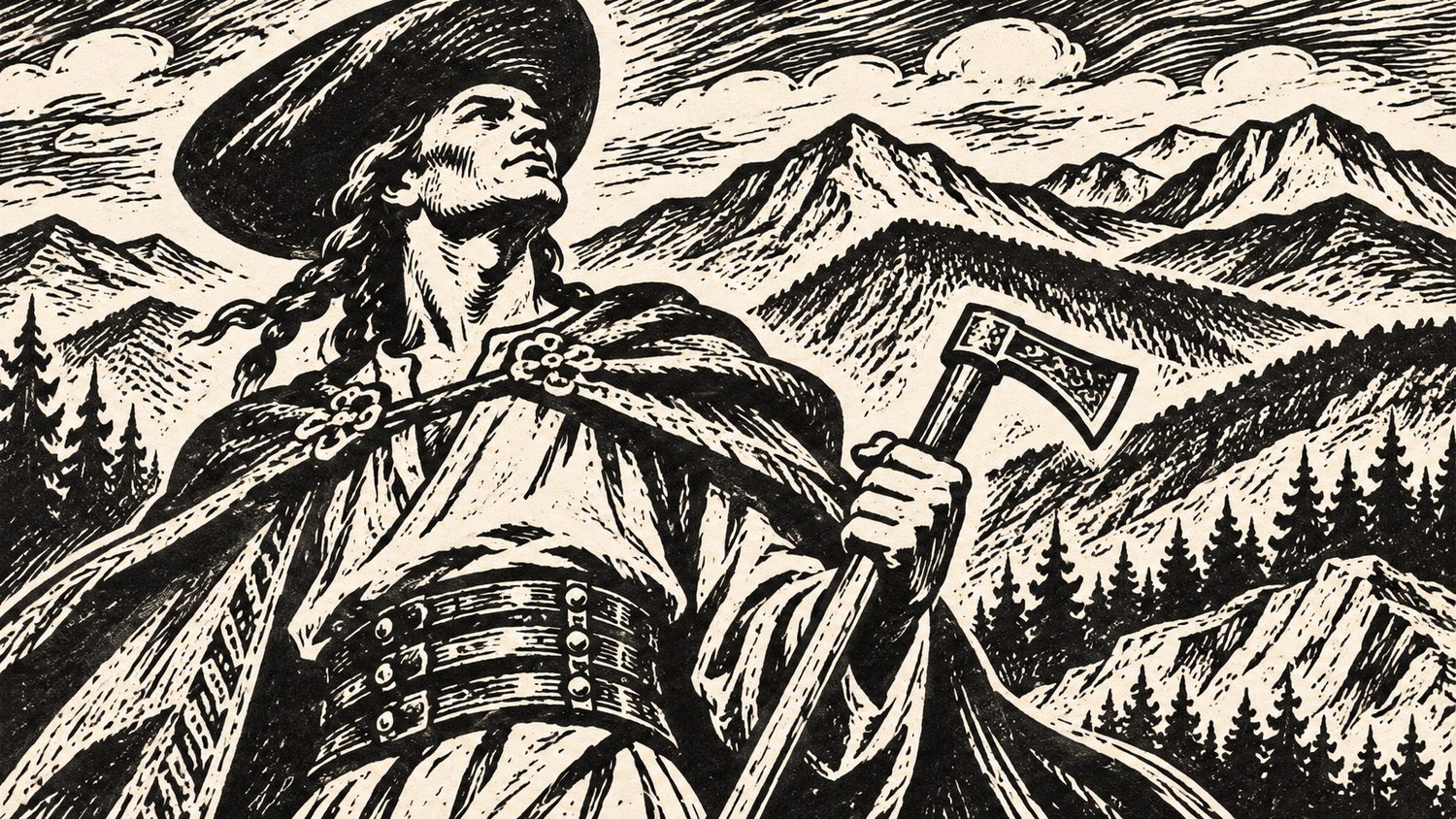
Who Was Juraj Jánošík?
He was born on 25 January 1688 in Terchová, a mountain village in the Malá Fatra range in what is now northwestern Slovakia. At the time, the region belonged to the Kingdom of Hungary. His family were peasants who made their living from shepherding, small-scale farming and forestry. Life in the mountains was harsh. According to tradition, Jánošík received some basic education and was even said to have considered becoming a priest, but fate had other plans for him.
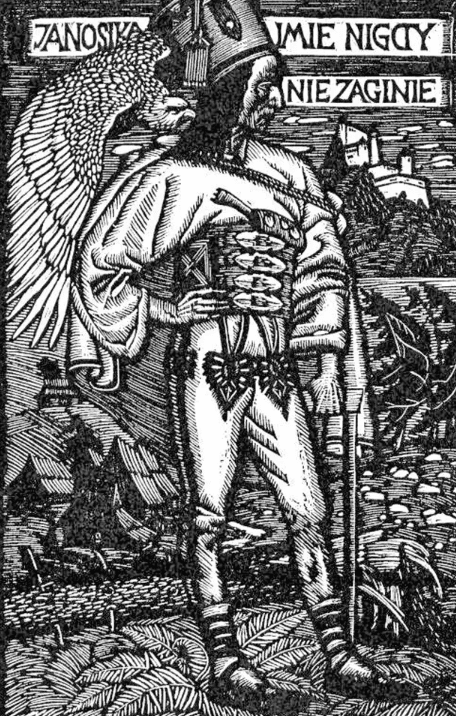
His first encounter with a different world came through military service. At the time, Francis II Rákóczi was leading an uprising in Hungary, and Jánošík joined the armed forces. After the fighting ended, he served as a guard at Bytča Castle. It was there that the outlaw Tomáš Uhorčík was imprisoned, and according to legend, Jánošík helped him escape. From that moment on, his path became closely linked with the mountain outlaws, and before long he became the leader of his own band.
What Did It Mean to Be an Outlaw?
Outlawry was not unusual in the Carpathian Mountains. The region was remote, state authority was often far away, and ordinary people suffered under forced labour, heavy taxation and military conscription. Some fled into the forests and formed small bands that survived by robbing merchants, noble estates and travellers. Local people had mixed feelings about them, but many offered support because the ruling nobility was deeply unpopular.
Jánošík's band operated roughly between 1711 and 1713, mainly in northern Slovakia, particularly in the regions of Liptov, Orava, Turiec and Považie. Folk legends place their adventures even farther afield, from Gemer to the borders of Moravia, Silesia and Poland. Their exact routes are impossible to reconstruct today, but the mountains of Malá Fatra, the Tatras and the Beskids provided ideal hiding places.
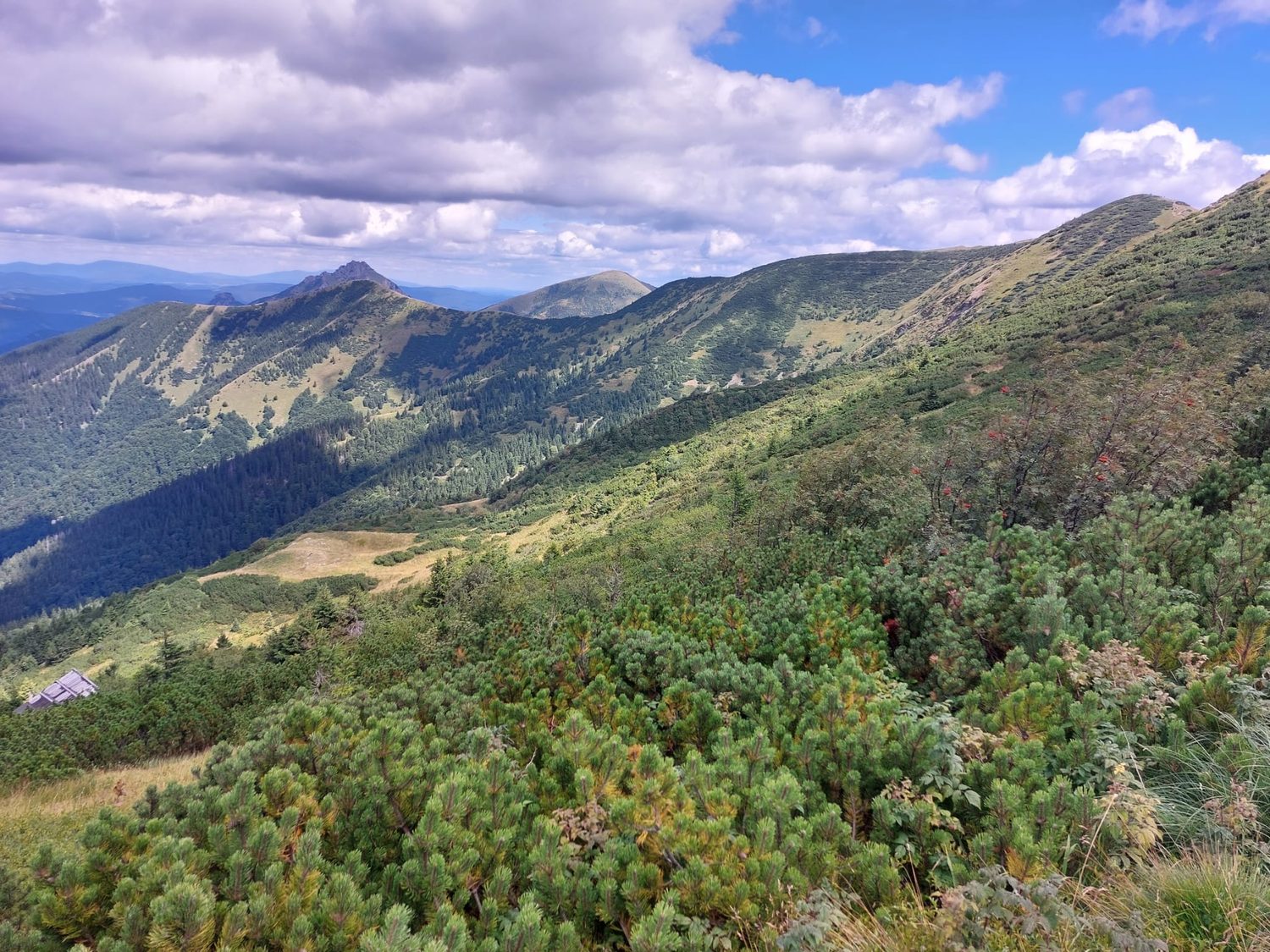
The Fatra Mountains, part of the Carpathian range, where mountain outlaws once operated.
Capture, Trial and Death
Jánošík's life as an outlaw was remarkably short. He was captured around the turn of 1712 and 1713 in Klenovec and taken to Liptovský Mikuláš. There, he was interrogated by the court, and contemporary records also mention torture. The verdict came in March 1713 and was brutal: execution by hanging from a hook through his rib. Jánošík was only twenty-five years old.
His young age and the courage he was said to have shown during his trial deeply moved ordinary people. His name gradually passed from court records into songs and stories, and the legend we know today began to take shape.
History and Legend
Historical sources present a rather more restrained picture of Jánošík. Court records describe robberies, and his band did not always treat its victims gently. Folk tradition, however, transformed him into a hero who robbed the rich and gave to the poor. Today, that image is far more powerful than the surviving archival documents. People projected their own longing for justice onto him. It may not be entirely historically accurate, but it helps explain why his story still resonates with us.
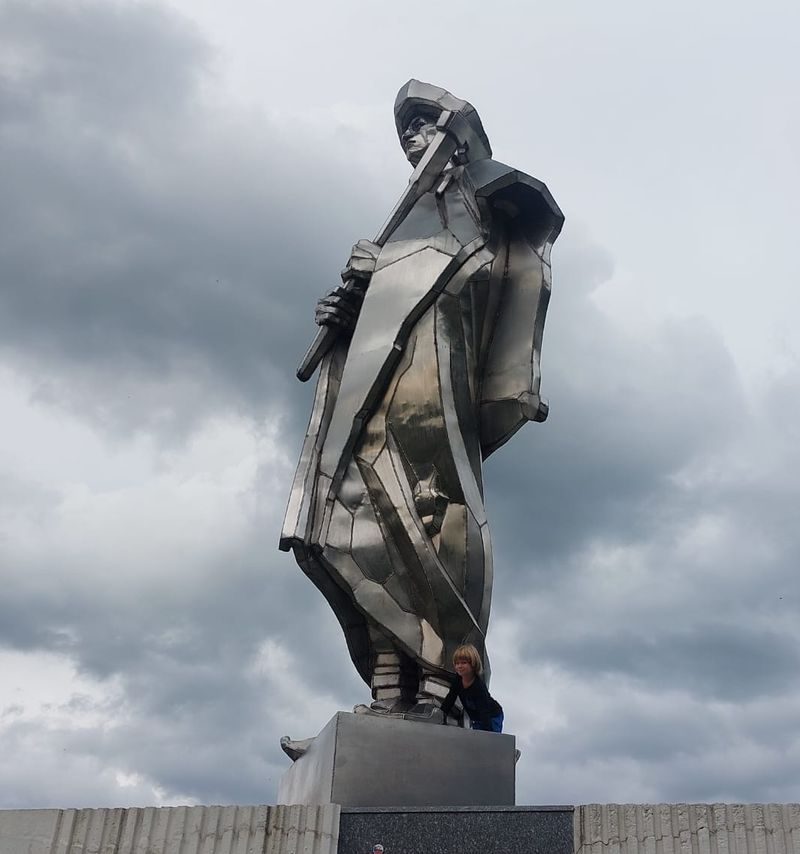
The monumental statue of Jánošík in the village of Terchová.
Jánošík and Other Carpathian Outlaws
Jánošík was far from the only famous outlaw in the Carpathians. Dozens of similar figures appear in the folklore of the region. In Moravia and Silesia, people still sing about Ondráš of Janovice, who operated in the Beskid Mountains and died in 1715. Polish highlanders from Podhale and Zakopane know Jánošík as Janosik and carry a similar traditional axe called a ciupaga. In Ukraine, there is Oleksa Dovbush, the leader of the Carpathian opryshky, who was killed in 1745. Romania has Pintea Viteazul from Maramureș, while Hungary, Serbia and Bulgaria have their own betyárs and hajduks.
Together, these stories form a kind of outlaw map of the entire Carpathian region. Every nation has its own hero, but the story is often similar: an ordinary man who stood up against those in power and paid for it with his life.
The Valaška: Jánošík's Faithful Companion
Whenever you see a picture of Jánošík, he is almost certain to be holding a valaška. This traditional highland axe has a long, often richly decorated handle. Shepherds carried it into the mountains as a walking stick, a practical tool and, when necessary, a weapon against wolves or thieves. Its name comes from the Vlachs, pastoral communities who settled throughout the Carpathian arc from the Middle Ages onwards, bringing their traditions and way of life with them.
Over time, this practical tool became a symbol of highland pride. Valaška axes can still be seen at folklore festivals, traditional costume parades and folk dances. One of the best-known dances is the odzemok, in which dancers demonstrate their strength and agility while handling the axe.
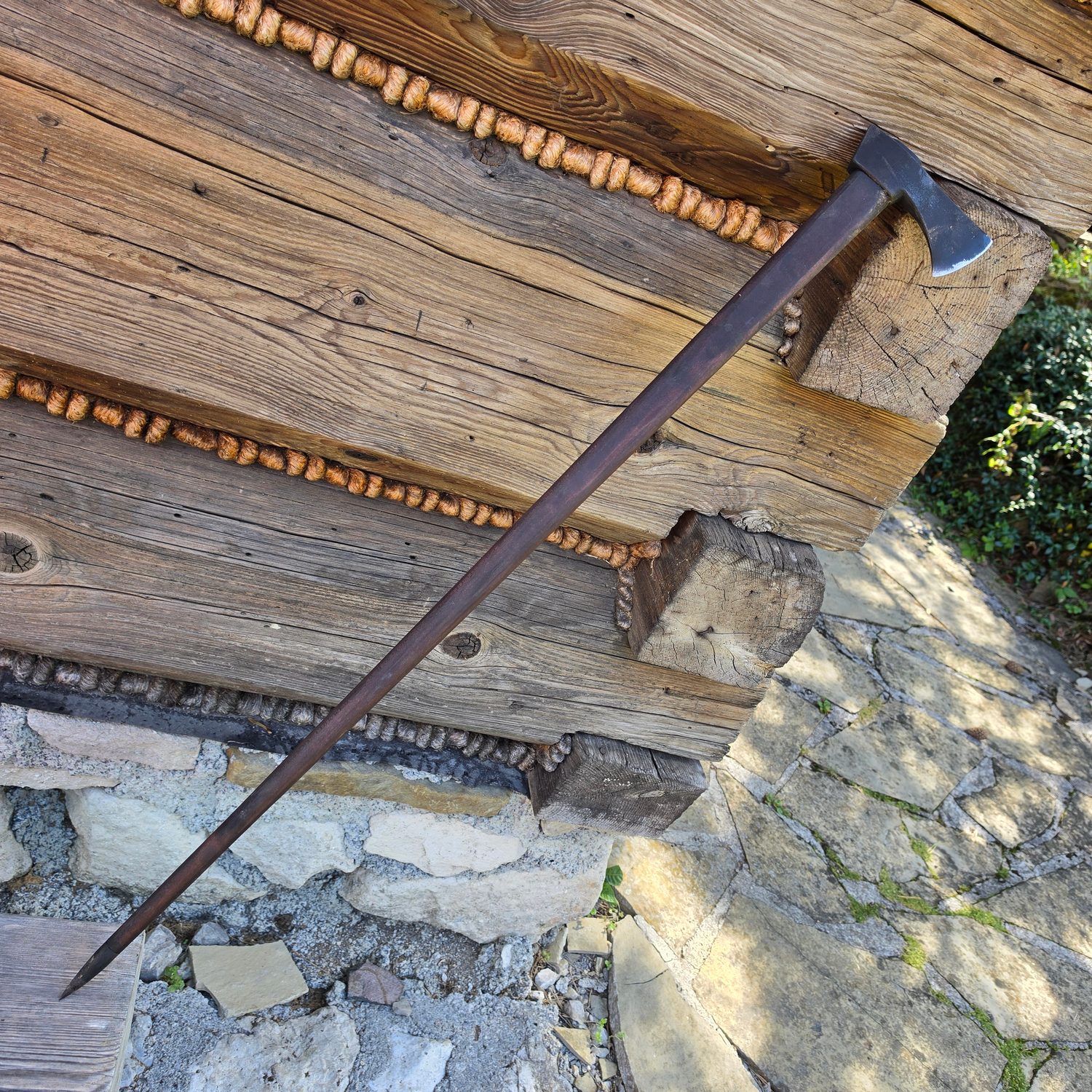
A traditional valaška axe from our forge.
Moravian Wallachia and Its Traditions
Moravian Wallachia, known locally as Valašsko, is a region in eastern Moravia at the foothills of the Beskid Mountains. It is one of the places where traditional highland culture has survived particularly well. Shepherding customs, folk songs, cimbalom music, traditional costumes and crafts remain part of local life, from timber construction to blacksmithing. If you would like to discover how people once lived here, visit the Wallachian Open Air Museum in Rožnov pod Radhoštěm, one of the largest open-air museums in Central Europe.
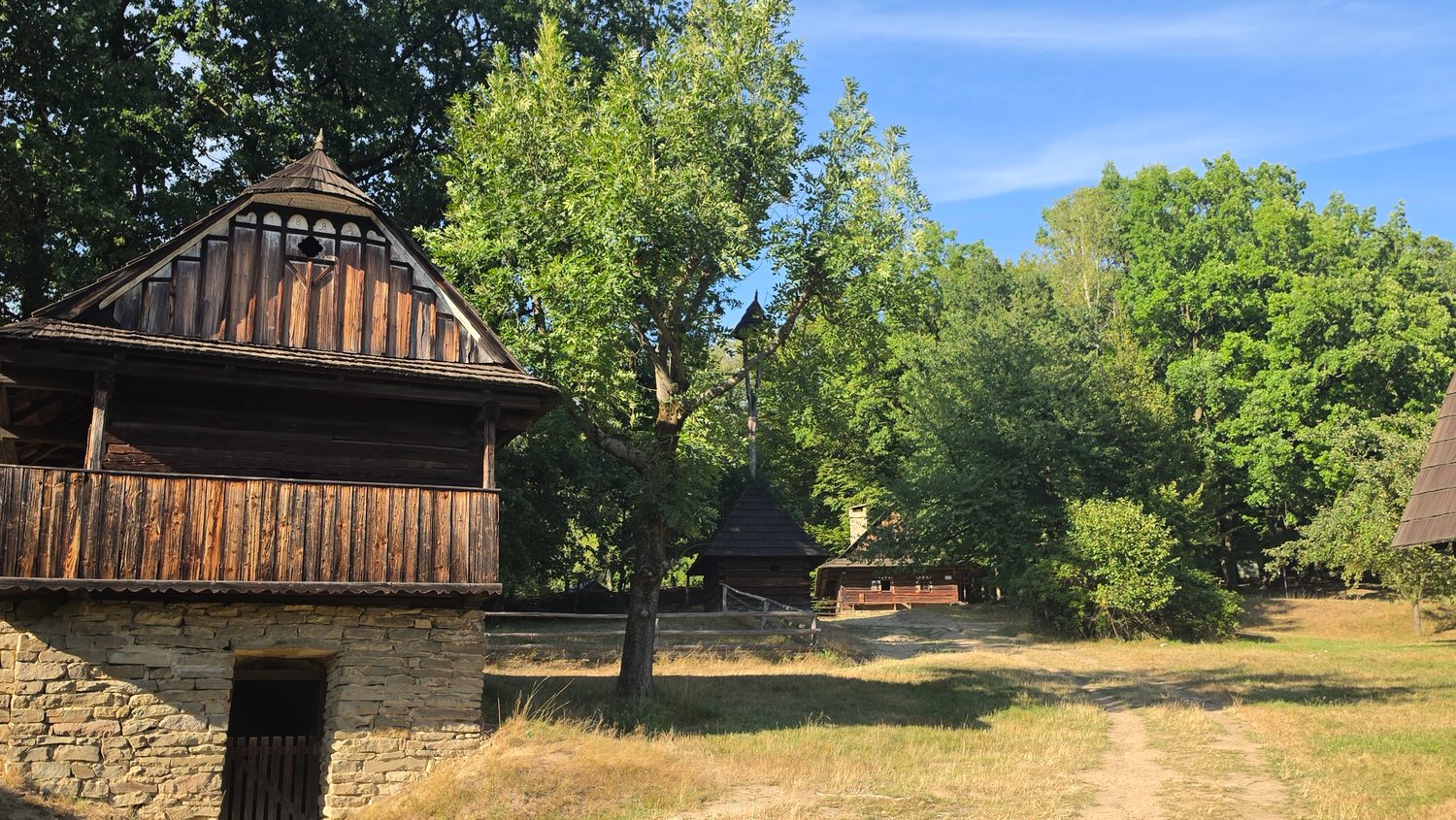
Traditional rural houses of the region.
Our Forge and Traditional Valaška Axes
We have been making traditional valaška axes for many years. Each one is handcrafted in our forge, following techniques passed down through generations of blacksmiths. The steel is heated, shaped and carefully finished so that the axe is not merely decorative, but a solid, well-balanced piece of craftsmanship made to last.
Our valaška axes make excellent gifts for anyone interested in history and traditional culture. They are also suitable as decorations for country cottages, additions to historical collections, accessories for traditional costumes or authentic souvenirs from the Wallachian region for visitors from abroad. Explore our selection here: traditional valaška axes from our workshop.
Jánošík in Popular Culture
Jánošík's legacy can be found throughout Central European culture. Folk songs and legends were passed down from the 18th century onwards, and during the 19th century, poets and writers embraced his story. The 20th century brought cinema. The first Slovak feature-length silent film, Jánošík, was made in 1921. Director Martin Frič released his version in 1935, followed by Slovak filmmaker Paľo Bielik in 1963. The Polish-Czechoslovak television series Janosik from 1973 remains legendary in Poland. More recently, Agnieszka Holland and Kasia Adamik offered a modern interpretation in their 2009 film Jánošík: A True Story.
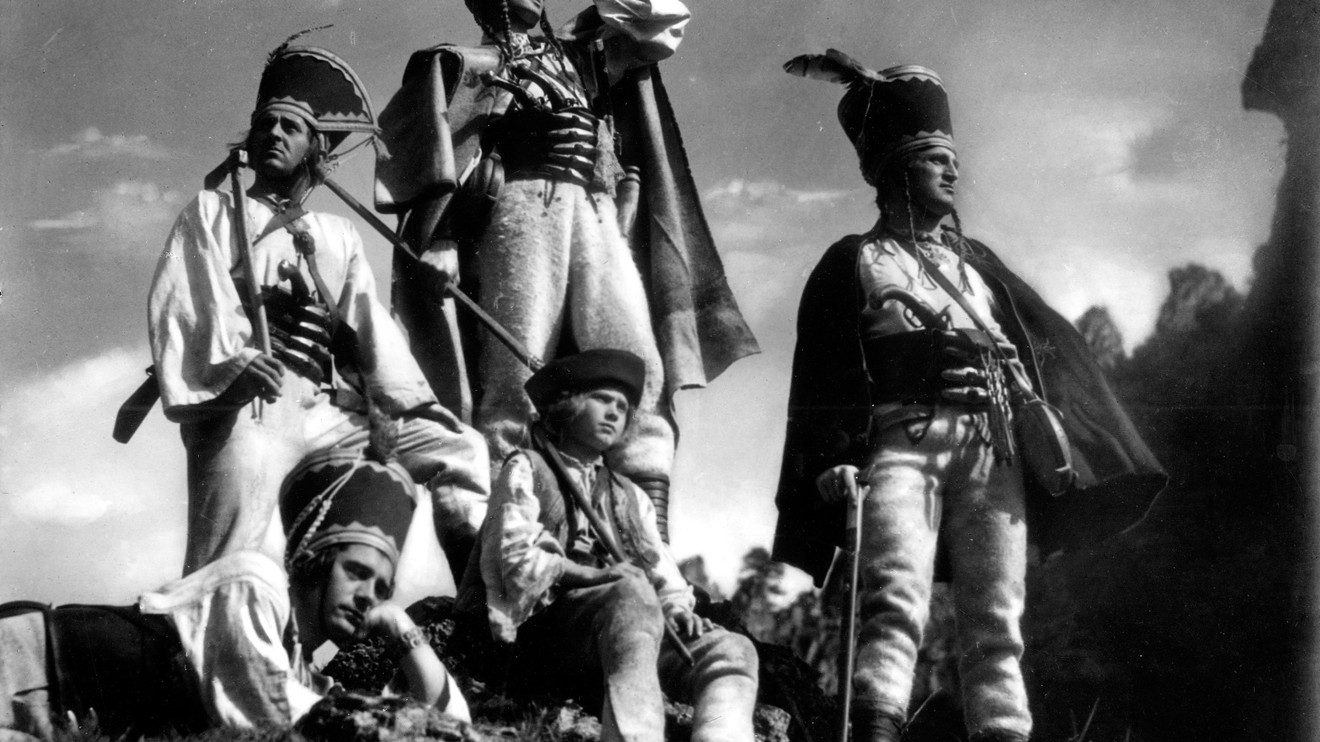
The Czechoslovak historical film Jánošík (1935), directed by Martin Frič, tells the story of the legendary Slovak outlaw Juraj Jánošík and is considered a classic of Czechoslovak cinema.
Every year, the village of Terchová hosts Jánošík Days, a festival filled with music, dancing and traditional crafts. In the Malá Fatra Mountains, visitors can also explore Jánošíkove diery, a popular series of rocky gorges associated with legends of hidden outlaw hideouts.
Why Jánošík Still Fascinates Us Today
It is a story of courage, of a man who dared to challenge the powerful, and of the freedom that mountain communities have always valued. Above all, it is the story of an ordinary young man from a mountain village who became a symbol of an entire nation.
For international visitors, Jánošík offers a fascinating introduction to the culture and history of the Carpathians. Travel through Slovakia, Moravian Wallachia or the Beskid Mountains, and you will encounter his legacy everywhere: in statues, songs, festivals and the hands of blacksmiths who continue to forge traditional valaška axes.
Frequently Asked Questions
When did Juraj Jánošík live?
He was born in January 1688 and executed in March 1713, at the age of twenty-five.
Where did Jánošík operate?
Mainly in northern Slovakia, particularly in the regions of Liptov, Orava, Turiec and Považie. Folk legends also connect him with areas near Moravia, Silesia and Poland.
What is a valaška?
A traditional highland shepherd's axe with a long handle. Originally used by shepherds as a practical tool and walking stick, it later became an important symbol of Carpathian highland culture.
Where can I buy a valaška?
We produce hand-forged traditional valaška axes in our own forge. You can find them in our collection at Wulflund.com.
Related products


