


Selkie

Selkies are neither fairies nor mermaids. And yet, they are something between a dream and a curse. In the water, they are seals – quiet, gliding, with deep eyes that humans tend to avoid. But when they come ashore, they can slip off their skin and transform. Into a woman. Into a man. Into a being that looks human, but never truly is.
When a Seal Sheds Her Skin
The sea can be silent. But in that silence, there’s sometimes a story, older than the lighthouses on the cliffs and deeper than the sea itself.
Picture it. You're walking along the Scottish coast, the mist rolling lazily over the rocks, the surf booming, and you catch movement among the waves. A seal. Or something that only seems like a seal. A blink. And suddenly there's a woman standing there. Naked, beautiful, her hair stuck together with salt water. And before you can take a breath, she's gone back into the sea.
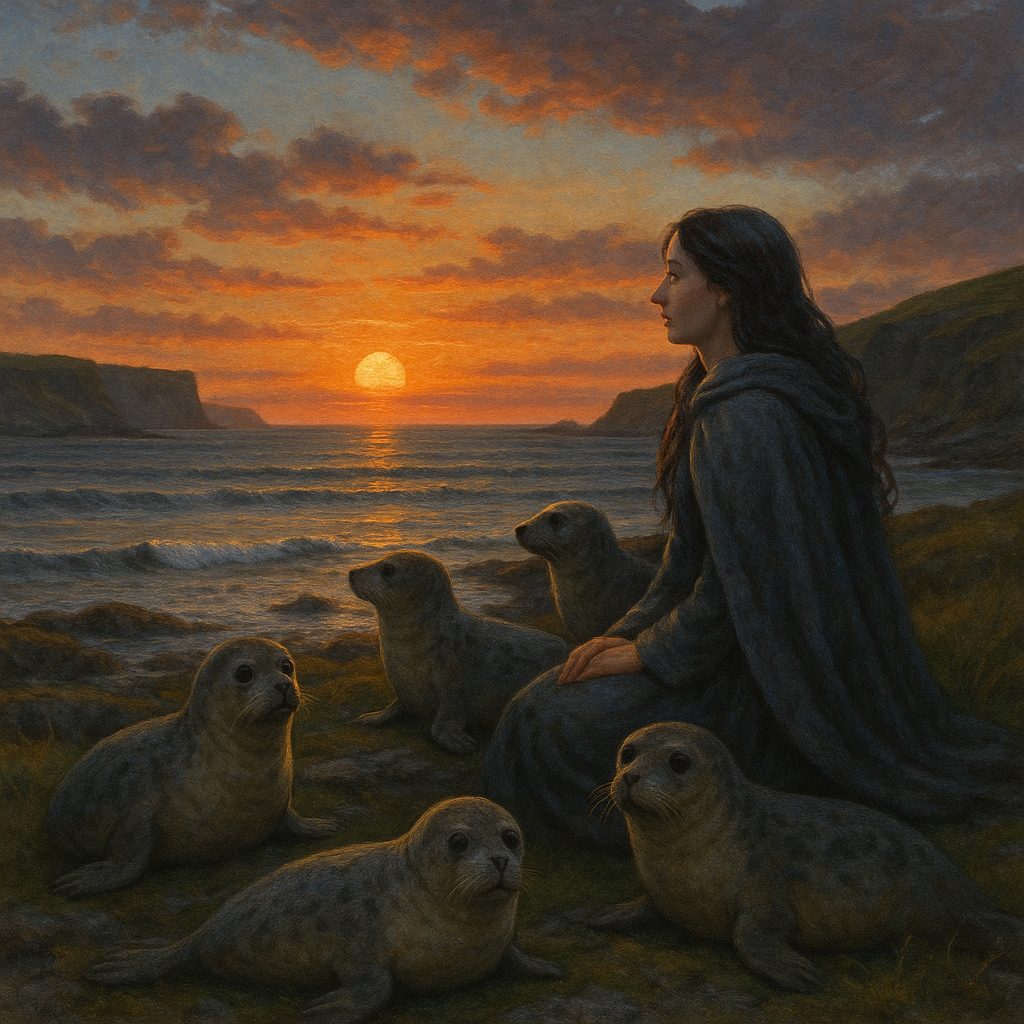
This isn’t the beginning of a horror story or a fantasy novel. It’s the tale of the Selkie – beings who live between two worlds. Seals by day, human by night. And only ever half at home in either.
Their legend has survived for centuries. Whispered among fishermen, written into old books – and today, it’s returning. Not as a tourist attraction, but as a parable of longing, freedom, and the things we cannot hold on to, no matter how much we love them.
In this article, we’ll dive beneath the surface. We’ll explore where the Selkie story came from, what it meant then and what it tells us now. And maybe you’ll find that even a myth from a foggy shore can have a very modern heart.
Who (Not) Are the Selkie?
Selkies are neither fairies nor mermaids. And yet, they are something between a dream and a curse. In the water, they are seals – quiet, gliding, with deep eyes that humans tend to avoid. But when they come ashore, they can slip off their skin and transform. Into a woman. Into a man. Into a being that looks human, but never truly is.
This is the heart of the legend: a Selkie lives a double life. The sea is her home, but the land smells of something forbidden. Her human form is beautiful, sometimes unearthly. She has piercing eyes – often dark or silvery – hair tangled with salt, movements like a slow, forgotten dance.
But it’s not just about looks. A Selkie has a soul that won’t fit in any box. She is free, untamed, and yet deeply vulnerable. That’s why so many tales revolve around someone stealing her seal skin. Hiding it. And by that, binding her. Without her skin, the Selkie cannot return to the sea. She is trapped. In a marriage, a house, a role she never chose.
Perhaps that’s where the lasting power of this legend lies. It’s not just about the magic of transformation. It’s about freedom. About losing it. And about what happens when we start to believe that love gives us the right to hold someone.
In some stories, the Selkie adapts. She loves her human partner, has children. But deep inside, the sea still sings. And one day – when she finds the skin, or fate leads her to it – she returns. No word of farewell. Just a wave disappearing over the horizon.
Where They Came From – The Origins of the Selkie Tales
Selkies weren’t born from a writer’s pen or a Hollywood need for another sea creature. Their home is the raw, windswept northern islands – the Orkneys, Shetlands, Hebrides. A place where seals are part of everyday life, where the sea isn’t scenery but a primal force that gives and takes.
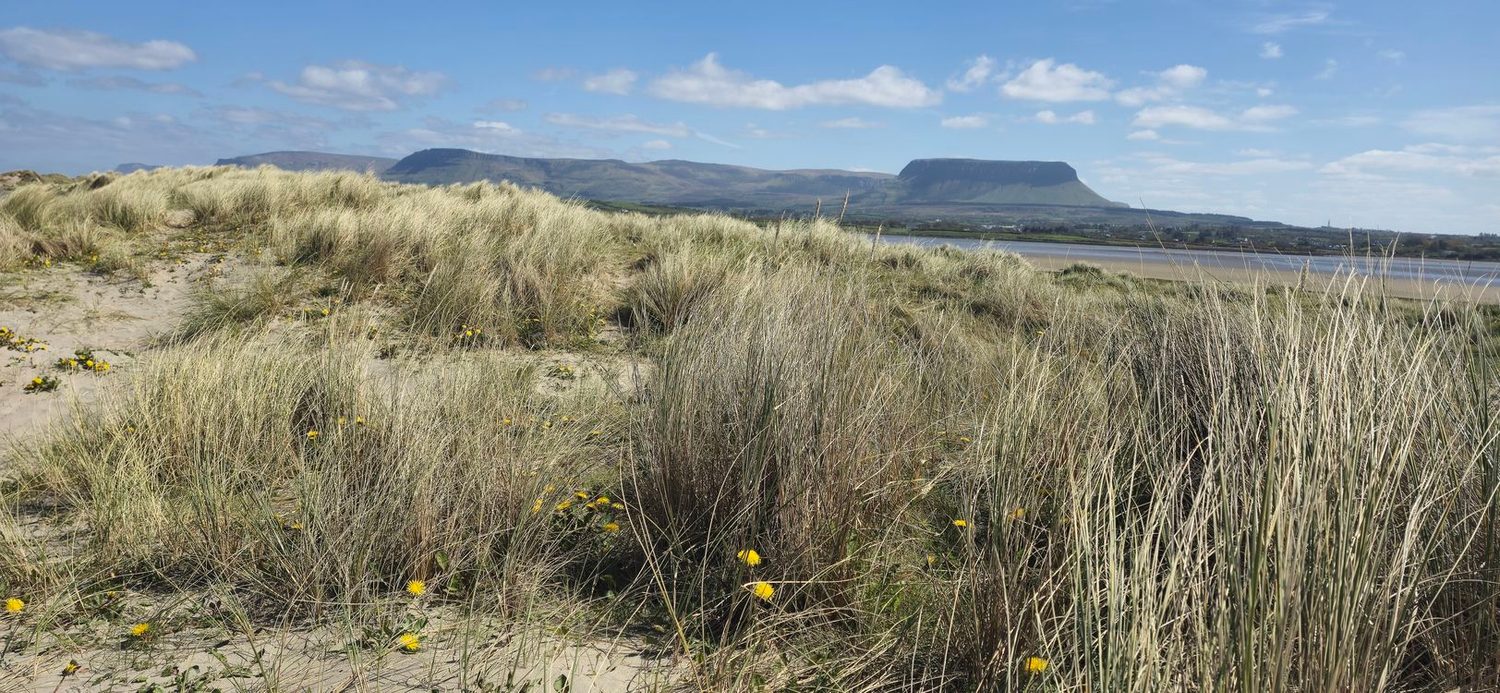
Streedagh Beach in Ireland, with the flat-topped mountain Ben Bulben in the background – a place where, according to legend, Selkies have been seen. Photo: Krak
The first mentions of beings who shift from seal to human appear in medieval local legends. The name “Selkie” likely comes from a Scots dialect word simply meaning “seal.” But the meaning is far wider – Selkies are seals with human souls.
The tales arose naturally – in communities shaped by the sea, where the border between reality and dream was thin. The stories explained missing people, unexpected children with strange features, but also spoke of longing and separation.
And then there are variations. In Ireland, Selkies mingle with beings called merrow. In Norwegian folklore, they have kin in the havfrue, and even Iceland has tales of “sea people” who leave the water to try life on land.
One theory says the legend grew from real events: shipwrecked sailors who returned “changed” – wild, silent, strange. As if they’d brought a piece of the deep back with them. Others look for a biological base – for instance, children born “in the caul” were once seen as mystical, not quite of this world. And sometimes animals themselves shaped the tale – seals were considered unusually intelligent, and their gaze unsettled many.
Whatever the origin, one thing is certain: the Selkie has clung to the shoreline of human imagination for centuries. And her story still hasn’t lost its power.
Related products
And what to read next?

Waterman, a character from Slavic mythology
A water spirit / demon from ponds and rivers. You will learn that he rides a catfish, drowns people, and what offerings are made to him.

Symbols of Scotland
History of Scottish symbols

Leshy - Slavic forest spirit
Leshy - Slavic forest spirit