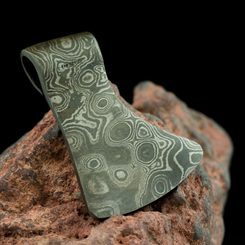
Viking axe – Dane Axe.
The Dane Axe, also known as the Danish axe, is one of the best-known weapons associated with the Viking Age. It is particularly characterised by its broad, relatively thin blade with a greatly extended cutting edge. Despite its size, the axe head did not necessarily have to be exceptionally heavy – its construction provided a large effective cutting edge while maintaining a relatively low weight.
This type of large battle axe became particularly widespread during the late Viking Age, approximately in the 10th and 11th centuries. It was used by Scandinavian warriors and later spread to other parts of Europe, especially the British Isles.
- Made of steel
- Overall length: approx. 95 cm
- Axe head dimensions: 20 × 20 cm
- Made in the Czech Republic by the Wulflund forge
This axe is made to a high standard of craftsmanship. The cutting edge is not sharpened, but the ends of the blade come to sharp points, so the axe is not suitable for combat training. We can sharpen the axe upon request.
The Dane Axe among the Vikings
The large axe was primarily a two-handed combat weapon. Its long haft provided the warrior with considerable reach and allowed powerful cutting blows. The broad cutting edge was effective against unprotected parts of the body as well as contemporary equipment.
The Dane Axe is particularly associated with professional and elite warriors. It was famously used by the huscarls, heavily armed retainers who served Scandinavian and Anglo-Saxon rulers. Large two-handed axes are also well known from depictions of the Battle of Hastings in 1066, where they were used by Anglo-Saxon warriors against the Normans.
Unlike smaller axes, which could also serve as everyday working tools, the large Dane Axe was, due to its dimensions and construction, primarily a specialised weapon of war.
Construction of the Viking axe
A typical feature is the broad blade with a long, curved cutting edge and a relatively narrow section around the eye of the axe. Historical examples were forged to make the blade as effective as possible without unnecessarily increasing the overall weight of the weapon.
The long wooden haft allowed the axe to be wielded with both hands and gave the warrior greater reach than a typical one-handed axe.


Related products