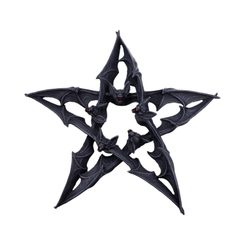
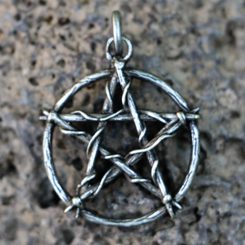
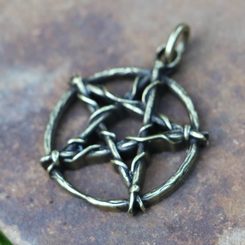
Stainless Steel Pentagram Pendant


The stainless steel pentagram pendant is a five-pointed star, one of the oldest symbols that humankind ever carved into stone and clay. Stainless steel is heavy, cold and does not tarnish. You can wear the pentagram in company, at a concert or by a fire, in the forest or in the city.
- Width: 25 mm
- Height: 36 mm
- Weight: 7 g
- Material: stainless steel
The pentagram: a star from the time before writing
The five-pointed star is older than Rome or Greece. The oldest known pentagrams come from Mesopotamia. They can be found on Sumerian pottery from the city of Ur and among the signs of the earliest writing from Uruk, roughly 3500 to 3000 years BC. This was a time when people were only just working out how to record speech. In Sumer it was written on clay tablets, and the star was among the first signs pressed into the clay.
What exactly it meant to the Sumerians, we do not know. Later, in the Babylonian period, the star is associated with deities such as Ishtar. This origin does not rule anything out, however: the five-pointed star also appears on Egyptian pottery and in other ancient cultures.
From Pythagoras to the knights
The Greeks knew it by the 7th century BC at the latest. The Pythagoreans made it a sign by which they recognised one another, and a symbol of health. In the Middle Ages it was borne on his shield by Gawain, a knight of the Arthurian legends. There, the five points stood for five virtues, five senses and the five wounds of Christ. The Renaissance scholar Agrippa of Nettesheim linked it in 1533 with the five elements and with the figure of a man with outstretched arms and legs.
The pentagram today
In pagan traditions, for example in Wicca, its five points are associated with earth, water, air, fire and spirit. A star enclosed in a circle is called a pentacle. For many people today it is a sign of faith in nature and the old ways. For metal fans it is a symbol of music that has always gone against the grain. Both stem from a star thousands of years old, which has outlived writing, empires and the religions that wanted to ban it.
Related products