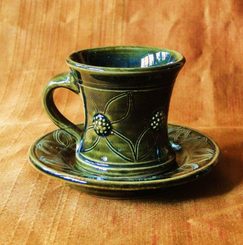
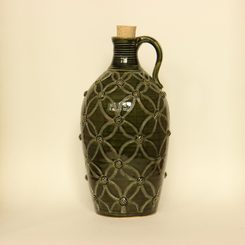
Handmade medieval ceramic plate with a green glaze and raspberry decoration, inspired by historical pottery from the Czech lands and Central Europe. The plate features a raised botanical design resembling raspberries. The green glaze highlights the relief decoration and reflects the colours traditionally used on historical glazed pottery.
The plate is handmade in the Czech Republic and fired at a temperature of 1100 °C. Each piece may vary slightly in shape, glaze colour, decorative details and dimensions.
- Material: ceramic, green glaze
- Diameter: approx. 21 cm, may vary due to handmade production
- Decoration: raised botanical raspberry motif
- Glaze: interior and exterior
- Firing temperature: 1100 °C
- Care: dishwasher safe
- Production: handmade in the Czech Republic
Botanical Motifs on Medieval and Renaissance Pottery
Botanical ornamentation was an important decorative element in medieval European art. Motifs depicting leaves, flowers, tendrils, branches and fruits appeared in illuminated manuscripts, architectural decoration, textiles and decorative crafts. Their designs ranged from relatively naturalistic representations of plants to stylised geometric ornaments.
In medieval and early modern pottery, the decoration of ceramic vessels developed according to regional traditions, available technologies and social conditions. Alongside incised and impressed patterns, painted decoration, raised designs and coloured glazes gradually became more widespread. Green-glazed pottery was common in many European regions, including the Czech lands.
Raspberry Motifs in Historical Art
Depictions of plants and their fruits formed part of medieval European visual culture. They appeared particularly in illuminated manuscripts, herbals and decorative arts. In medieval herbals, botanical illustrations also served a practical purpose, helping readers identify plants and understand their medicinal properties.
Various botanical ornaments have been archaeologically documented on pottery from the Czech lands, particularly from the Late Middle Ages and the early modern period.
Historical Pottery in the Czech Lands
Medieval and Renaissance pottery is among the most common archaeological finds from Czech castles, towns and rural settlements. The development of tableware was closely connected with changes in dining customs, the growth of urban pottery workshops and the spread of new manufacturing technologies.
From the Late Middle Ages, and particularly during the 16th century, the range of glazed tableware expanded in the Czech lands. Alongside bowls, jugs and drinking vessels, plates with coloured glazes and botanical decorations became increasingly common. Archaeological finds from South Bohemia document the use of green, yellow and yellow-green glazes, as well as painted botanical motifs.
The green ceramic plate with raspberry decoration is suitable for historical table settings, medieval and Renaissance banquets, themed restaurants and everyday use.


Related products