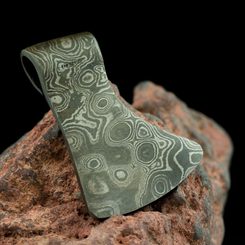
This shape of fire steel is very characteristic of Viking fire steels. However, similar fire steels were also used by Germanic tribes, Slavs, and even during the later Middle Ages.
This Viking fire steel is hand-forged from carbon steel. It stands out for its high-quality craftsmanship and easily produces sparks which, when combined with suitable tinder, allow for quick and reliable fire starting.
During the Viking Age, a fire steel was an indispensable part of everyday household equipment, and it was hard to imagine a medieval kitchen without one.
- Dimensions of the fire steel: 8 × 2.5 cm.
Using dry tinder, flint, and a little practice, sparks can be produced by striking the flint against the fire steel. These sparks ignite the prepared tinder, and with steady, careful blowing, the initial ember quickly develops into a small flame capable of starting a fire.
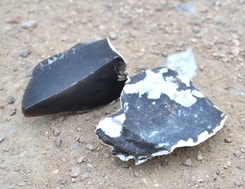
Suitable tinder materials include dried tinder fungus (amadou), finely teased cattail fibers, or thin strips of birch bark. Natural flint or suitable quartzite, such as that found along the Baltic Sea coast, can be used as the striking stone.


Related products