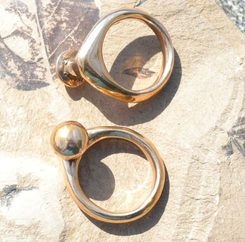
Duhovka is the common Bohemian name for a Celtic coin – a stater (an ancient coin and also a unit of weight). The ancient Celts minted them from the 3rd to the 1st century BC in the territory of Gaul, as well as Bavaria and Central Europe.
They began to be called rainbow coins by people who found them in fields after rain had washed their surface, making the coins shine in the sunlight.
It was believed that they were found where the rainbow touched the ground.
The minting technology consisted of placing a measured amount of gold or silver into small depressions in minting plates. The metal was melted, and the resulting blanks were used with dies to strike the coins. Minting workshops were located in oppida.
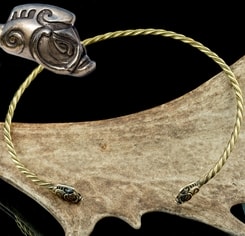
Worth mentioning is the discovery of the Podmokly Treasure on 12 July 1771 near the village of Podmokly in the Rokycany region of Bohemia. It contained several thousand Celtic coins – rainbow coins – with a total weight of 30–40 kg. The treasure was found in a bronze vessel along with a torc. Its age is estimated to be from the mid-1st century BC.
The treasure was found on a slope near a local stream and was taken apart by local inhabitants. When Prince Karl Egon of Fürstenberg learned of this, he reportedly sent the bailiff Růžička, who retrieved much of it for the prince in a rather harsh manner. The prince then had most of the gold melted down and used it to mint ducats.
- Material: zinc, polished brass finish
- Dimensions: 20 mm
- Weight: approx. 5 g
- Motif: stylized shell or rays of the sun
- Based on historical finds: Celtic gold coins


Related products