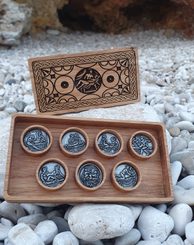
Roman buckle in the shape of a duck according to the original find from Vindolanda. This detailed replica is based on a Roman fibula found in the fortress of Vindolanda in northern Britain.
The buckle dates from the 3rd century AD and is one of the so-called trumpet fibulae that were widespread in Roman Britain. Due to its curved shape resembling a stylised duck, it is now referred to as a 'duck brooch'.
The original was found in a ditch inside Vindolanda Fortress along with human remains. The find is one of the best known archaeological discoveries from the Roman presence in Britain.
- Dimensions: 6,3 × 2,5 × 1,9 cm
- Inspiration: original find from Vindolanda
- Period: 3rd century AD.
Vindolanda was a Roman auxiliary fortress built near Hadrian's Wall in the late 1st century during the reign of the Emperor Domitian. Today it is one of the most important archaeological sites in Roman Britain.
The trumpet fibulae originated in a Romanised Celtic culture during the 2nd century AD. Their shape followed earlier Celtic designs and gradually spread throughout the empire with the Roman armies. Fibulae served not only as a practical fastening for clothing, but also as a personal adornment and a sign of social status.


Related products