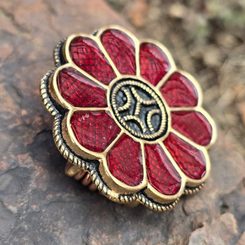
Late Anglo-Saxon circular brooch with cloisonné decoration, 950-1066 AD, Yorkshire and the Humber.
Material: cast brass, decorated with cold enamel. Diameter (including side loops) approx. 50 mm.
This type of jewellery is a characteristic example of the late Anglo-Saxon artistic style, mixing domestic traditions with continental and Scandinavian influences. The cloisonné technique (decoration of coloured fields separated by metal partitions) was known in England from the early Anglo-Saxon period and is found on elite belts and buckles as well as on jewellery - especially brooches, which had both a decorative and functional role in fastening clothing.
In the 10th-11th centuries, circular brooches became a popular item of clothing. They were used to fasten cloaks or veils and often served as a visual indicator of the wearer's social status. Richly decorated examples such as this one indicate a connection to the world of the aristocracy or upper-class rural elite.
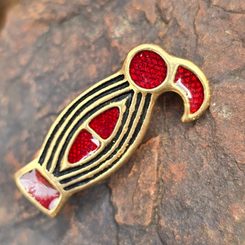
Saxon jewellery in England generally excelled in technical skill and rich ornamentation. In addition to brooches, these included rings, earrings, belt loops and amulets. Cross motifs, floral ornaments and geometric designs, sometimes inspired by Viking art, were popular. Jewellery was not only made locally but also imported - England was heavily involved in long-distance trade in the 10th-11th centuries, so jewellers could draw inspiration and materials from Europe and Scandinavia.
This example from Yorkshire is thus a testament to the cultural and artistic richness of Anglo-Saxon England shortly before the Norman invasion.
- Made in Ukraine by Armour and Castings


Related products